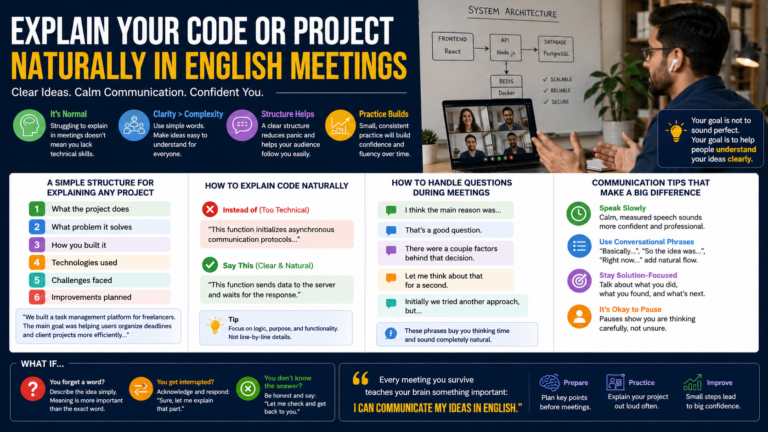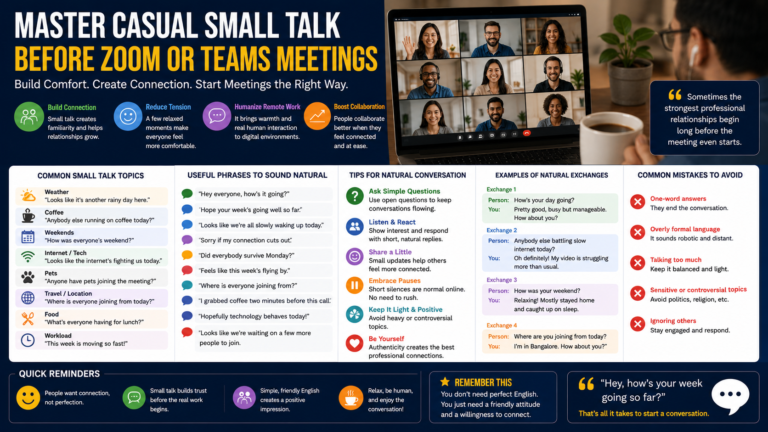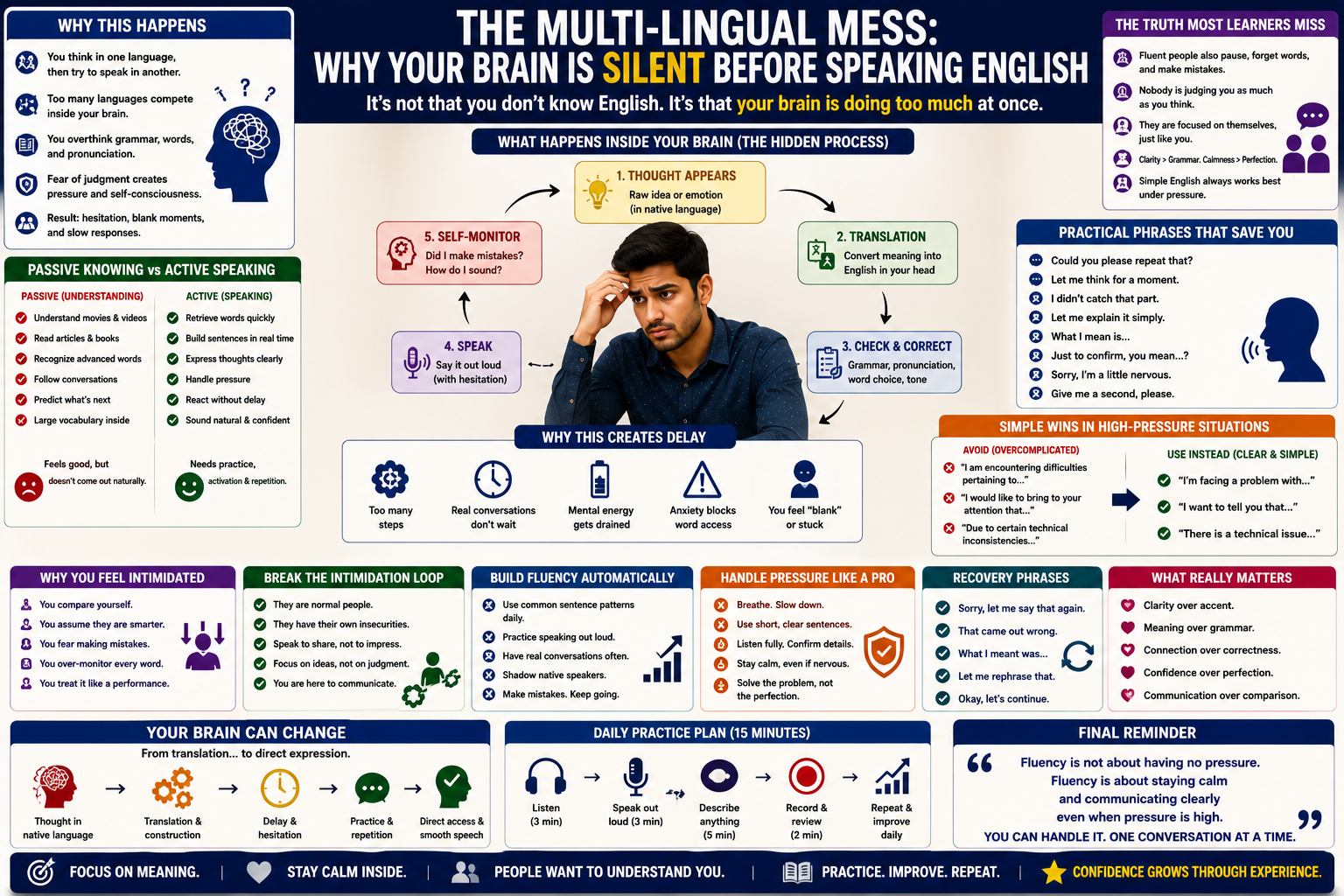
The Multi-Lingual Mess: Why Your Brain Freezes Before Speaking English
There is a very strange kind of silence that happens inside the mind of a multilingual speaker right before they speak English in a real situation. It is not the silence of not knowing what to say. It is not confusion in the traditional sense. It is something more subtle, more internal, and much more psychologically layered. It is the silence of processing too many languages at the same time while trying to produce one clean sentence in real time.
And this silence is something millions of people experience every single day but almost nobody names it properly.
When a person grows up in a multilingual environment, language does not exist as a single straight path in the brain. It exists as a network. One language handles emotions. Another handles family conversations. Another handles education. English enters later as a structured system that is often associated with performance, evaluation, professionalism, or external validation. So instead of one smooth communication pipeline, the brain builds multiple parallel language systems that constantly interact with each other.
Now imagine what happens when you are asked to speak English under pressure.
You are not simply “thinking and speaking.”
You are selecting a language first. Then translating thought into that language. Then checking grammatical structure. Then monitoring pronunciation. Then adjusting tone. And all of this is happening in real time while another person is waiting for your response.
This creates a very unique kind of cognitive load that feels like hesitation, but is actually internal processing overload.
And this is where the “Multi-Lingual Mess” begins.
Because the brain does not switch languages cleanly like a button. It blends them. It overlaps them. It borrows words from one system to complete another. And sometimes it freezes completely when it cannot find an immediate equivalent that feels emotionally and contextually correct.
This is why many intelligent people suddenly sound less confident in English conversations even though they fully understand the topic. It is not a knowledge issue. It is a processing issue. And more importantly, it is a timing issue.
Because real conversation does not wait for translation.
It keeps moving.
And your brain is trying to catch up while also trying to be perfect at the same time.
That combination is where pressure is born.
Now, something very interesting happens in multilingual minds that makes this even more complex. Thought itself is not always in English or any single language. Thought often begins as raw meaning, almost like emotion or intent, and only later gets converted into language. But in multilingual speakers, that conversion process has multiple possible routes.
A thought might start in Hindi, shift partially into English, borrow structure from another language, and then get reconstructed again before being spoken. This internal movement is completely normal, but it creates delay. And in communication, delay is often interpreted as hesitation, lack of confidence, or lack of fluency.
But in reality, it is none of those things.
It is simply a brain doing extra work behind the scenes.
And this is where frustration begins for many learners. Because they compare their internal slow processing with someone else’s external fluent output. They do not see the mental translation happening inside others. They only see the final polished sentence. And that creates an illusion that others are naturally fluent while they are not.
But fluency is not as natural as it looks.
It is trained automaticity.
It is repetition that removes translation delay.
And without that automaticity, every sentence becomes a small mental project.
Think about a simple situation. Someone asks you a question in English during a meeting. You understand it instantly. You know the answer in your native language instantly. But before you speak, your brain begins converting it into English. During this conversion, you start thinking about grammar correctness, vocabulary selection, sentence structure, tone of professionalism, and fear of making mistakes.
Now what should have been a 2-second response becomes a 10-second internal process.
And during those 10 seconds, the pressure increases.
The other person waits.
Silence becomes noticeable.
Your mind becomes more aware of itself.
And suddenly even simple sentences feel heavier than they actually are.
This is the hidden emotional loop of multilingual communication.
And it is one of the biggest reasons why people feel “less fluent” in English even when their understanding level is very high.
Another important layer of this experience is identity switching. Many multilingual speakers do not just switch languages. They switch versions of themselves. There is a version of you that exists in your native language where you feel fully expressive, emotionally natural, and socially confident. And then there is a version of you that exists in English where you become more careful, more monitored, more controlled, and more self-conscious.
This identity shift creates subtle psychological resistance.
Because when you speak English, you are not just speaking differently. You are behaving differently.
And that difference creates mental friction.
You start monitoring yourself more than the conversation. You become aware of your mistakes before they even happen. You start editing sentences mid-thought. You become overly aware of pronunciation. And slowly, natural flow disappears.
But here is the most important truth that most learners never realize early enough.
English fluency is not the absence of translation.
It is the removal of translation from active awareness.
Meaning, translation may still exist in the background, but it should not interrupt speech flow.
The moment translation becomes invisible, communication becomes natural.
And this transition is not about intelligence. It is about exposure, repetition, and emotional normalization.
Because the brain only stops translating when it no longer feels English as an external system. The more it feels like a separate subject, the more translation it requires. The more it feels like a natural communication tool, the less translation it needs.
This is why some people improve rapidly when they start using English daily in real contexts. Not because they suddenly became smarter, but because their brain stopped treating English as a separate task and started treating it as a communication environment.
And this is the core problem the “Multi-Lingual Mess” creates.
It keeps English in a separate mental compartment instead of integrating it into natural thinking flow.
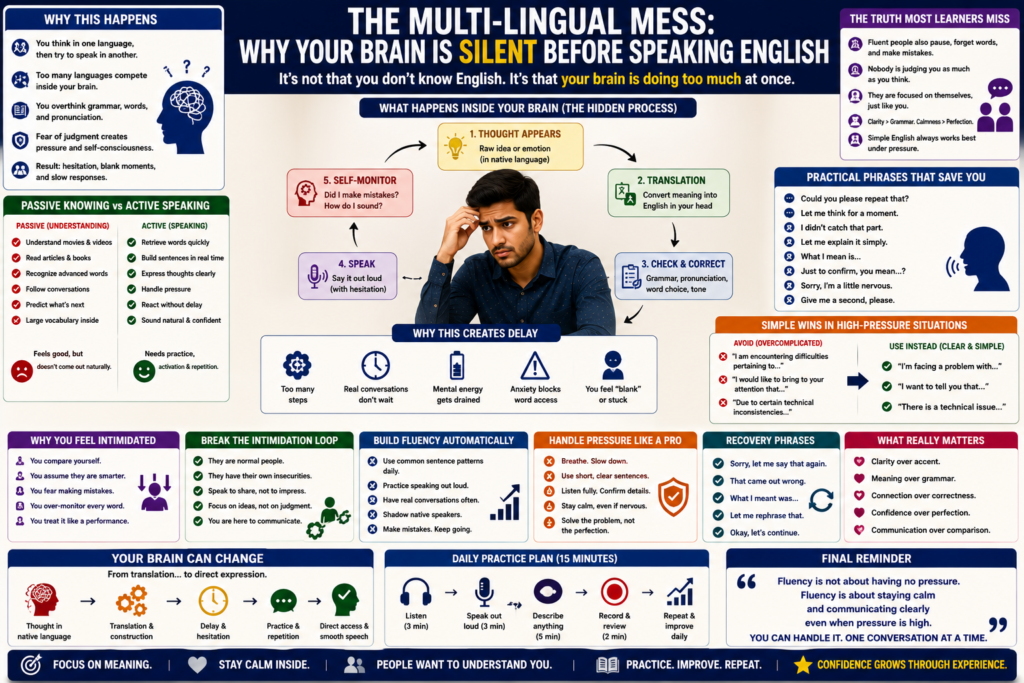
WHY THIS MESS CREATES “SLOW FLUENCY”
Slow fluency is not lack of knowledge. It is delay in expression. And that delay comes from repeated internal switching between languages, emotional states, and self-monitoring systems.
A multilingual speaker often experiences this chain:
Thought → Native Language → Translation → Grammar Check → English Output → Self-Correction → Delayed Speech
And each step adds friction.
Even a simple idea becomes multi-layered.
This is why many people feel mentally tired after speaking English for a while. Not because speaking is hard, but because constant conversion is exhausting.
And over time, this leads to avoidance behavior. People start avoiding speaking situations. They prefer text over voice. They prefer silence over participation. Not because they lack ideas, but because processing feels heavy.
But the reality is, this entire system can become smoother with the right kind of exposure and awareness.
Because fluency is not about eliminating your native language. It is about reducing dependency on it during real-time expression.
WHY PEOPLE MISUNDERSTAND THEIR OWN FLUENCY
One of the most damaging misunderstandings in multilingual learners is the belief that “If I hesitate, I don’t know English.”
This is not true.
Hesitation often means:
- too many internal translations
- too much self-monitoring
- lack of speaking automation
- emotional pressure
Not lack of knowledge.
In fact, many learners who hesitate in speaking can write excellent English without any delay. This shows the knowledge is already there. The issue is real-time production.
And real-time production is a completely different skill category.
It is closer to performance than theory.
Which is why it feels different under pressure
BREAKING THE TRANSLATION LOOP
At some point in every multilingual speaker’s journey, there comes a realization that completely changes how they look at English communication. It is the understanding that the real barrier is not vocabulary, not grammar, and not even pronunciation. The real barrier is something invisible, something happening in milliseconds inside the mind before a sentence is spoken.
That barrier is the translation loop.
And this loop is so automatic that most people don’t even notice it happening.
A thought appears in your mind, but it does not appear in English. It appears in your dominant internal language, the one that feels emotionally closest to you. Then your brain immediately tries to convert that thought into English before speaking. But during this conversion, the sentence is not just translated word by word. It is reconstructed. It is reshaped to fit grammar rules. It is checked for correctness. It is evaluated for tone. And sometimes it is even redesigned to sound “better” than the original thought.
This entire process creates delay.
And in real conversation, delay feels like hesitation.
But here is the most important truth: fluent speakers are not faster because they know more English. They are faster because they skip the conscious translation step.
Their brain still understands meaning, but it does not rebuild the sentence from scratch every time. Instead, it retrieves pre-built communication patterns. It uses ready-made structures. It responds through stored linguistic shortcuts that feel natural because they have been used repeatedly in real situations.
This is why fluency is not about intelligence. It is about automation.
And automation is built through repetition, not theory.
The moment a sentence type becomes familiar enough, the brain stops translating it consciously. It starts producing it directly. And this is where communication starts to feel smooth.
But before that stage, everything feels heavy.
Every sentence feels like construction work.
WHY YOUR BRAIN FREEZES DURING ENGLISH SPEAKING
There is a very specific moment many learners experience during conversations that feels almost physical. It is the moment when you know what you want to say, you understand the question completely, and you even know the answer in your mind, but your mouth does not move immediately.
Instead, there is a pause.
A gap.
A mental blank space that feels longer than it actually is.
This is not confusion. This is overload.
Because in that moment, your brain is running multiple processes at the same time.
It is retrieving meaning from memory. It is converting that meaning into English structure. It is checking grammar rules in the background. It is monitoring pronunciation risk. It is calculating social judgment. And at the same time, it is trying to maintain conversational speed.
This is too many tasks for a single instant.
So the system slows down.
And that slowdown feels like freezing.
But freezing is not failure. It is a sign that your communication system is not yet automated.
Think of it like driving a car for the first time. At the beginning, every action requires conscious effort. Clutch, brake, gear, mirror, steering—all of it feels overwhelming. But after enough practice, the actions become automatic. You no longer think about each step. You simply drive.
English fluency works in a very similar way.
REAL-LIFE COMMUNICATION PATTERNS
One of the biggest misunderstandings learners have is imagining that fluent speakers are constructing perfect sentences in their heads before speaking. This is not true.
In real conversations, especially informal or professional ones, fluent speakers rely heavily on patterns rather than full sentence planning.
They use small communication blocks like:
They start a sentence and adjust it mid-way.
They pause naturally without panic.
They use filler phrases to maintain flow.
They repeat ideas in simpler form if needed.
They don’t wait for perfection before speaking.
For example, instead of carefully constructing a perfect sentence, a fluent speaker might say something like:
“Well, I think the main issue here is… yeah, basically the system is not syncing properly.”
Notice how the sentence is not fully structured from the beginning. It evolves while speaking.
This is extremely important.
Because multilingual learners often try to do the opposite. They try to complete the entire sentence in their head before speaking it. And that creates delay.
Fluency comes when you allow thinking and speaking to overlap instead of separating them.
THE MYTH OF “THINKING IN ENGLISH”
A lot of learners hear advice like “start thinking in English,” but this advice is often misunderstood.
Thinking in English does not mean replacing your native thought system completely. That is unrealistic for most people, especially in early stages.
Instead, real fluency begins when translation stops being mandatory.
At first, your brain may still think in your native language. That is natural. But over time, with repeated exposure, certain ideas start getting directly associated with English expressions. Not translated—associated.
For example, instead of thinking a sentence in your native language and then converting it, your brain starts recognizing situations and immediately producing English patterns attached to them.
This shift is subtle but powerful.
And it only happens through real usage, not mental pressure.
The more you force thinking in English, the more unnatural it feels. But the more you use English in real communication, the more naturally it starts appearing in your thought process without conscious effort.
WHY SIMPLICITY ALWAYS WINS IN REAL COMMUNICATION
Another key problem multilingual speakers face is overcomplication. Because they feel insecure about fluency, they often try to compensate by using complex vocabulary or overly formal sentence structures.
But in real communication, especially spoken communication, complexity usually reduces clarity.
Fluent speakers do not aim to sound impressive. They aim to sound understandable.
That is why simple sentences dominate real conversations.
Not because people lack intelligence, but because simple language reduces processing time for both speaker and listener.
For example:
Instead of thinking:
“I am experiencing difficulty in the execution of the current process due to technical inconsistencies…”
A natural speaker would say:
“There’s a problem with the process right now.”
The meaning is identical.
But the processing load is completely different.
And in real-time communication, lower load equals higher fluency.
THE ROLE OF EMOTIONS IN MULTILINGUAL SPEECH
One of the most overlooked factors in English communication is emotional state. Many learners assume language is purely logical, but speaking is deeply emotional.
When a person feels pressure, embarrassment, fear of judgment, or self-awareness, their cognitive load increases automatically. This affects fluency directly.
In multilingual communication, this effect becomes even stronger because the brain is already working harder due to translation processes. When emotional pressure is added on top of that, performance drops significantly.
This is why the same person can speak English confidently in a relaxed environment but struggle in meetings, interviews, or formal situations.
It is not the language that changes.
It is the emotional environment.
WHY CONSISTENCY BEATS KNOWLEDGE
At a certain point, learners realize something very important: improvement in speaking is not directly proportional to how much English they know. It is proportional to how often they use it in real time.
Consistency creates familiarity.
Familiarity reduces translation.
Reduced translation increases speed.
And increased speed creates fluency.
This is why people who actively speak English daily improve much faster than those who only study it academically.
Even imperfect speaking accelerates fluency because it trains the brain to handle real-time pressure.
ADVANCED COMMUNICATION STABILIZATION
At a certain stage in multilingual communication, the goal is no longer just “speaking English correctly.” The goal becomes something more subtle and more powerful: stabilizing your communication flow so that your thoughts, even if imperfect, move forward without interruption.
This is where real fluency starts separating itself from academic English knowledge.
Because up to this point, many learners are still operating in a “construction mode.” Every sentence is built carefully in the mind before it is spoken. Every word is evaluated. Every structure is monitored. And every conversation feels like a performance that needs approval.
But in real communication environments—especially corporate, freelancing, or client-based interactions—this kind of internal perfection checking actually slows you down more than it helps you.
Stabilization means your brain stops trying to rebuild every sentence from scratch. Instead, it starts using “communication flow blocks.” These are simple, reusable sentence patterns that act like bridges between thoughts.
For example:
Instead of stopping to construct a perfect sentence, you use natural continuation phrases like:
“I think the main issue is…”
“Let me explain it in a simple way…”
“What I mean is…”
“Basically…”
“So the situation is…”
These are not filler in the negative sense. They are structural supports. They keep speech alive while your brain organizes deeper meaning in the background.
Fluent speakers use these unconsciously. Multilingual speakers must learn to use them consciously first, and then slowly turn them into habits.
Once this stabilization starts happening, communication feels less like translation and more like unfolding.
REAL-WORLD MULTILINGUAL MASTERY
There is a very important shift that happens when a multilingual speaker finally begins to feel comfortable in English conversations. It is not that they stop using their native language internally. It is that English stops feeling like an external “subject” and starts becoming a functional communication layer.
This shift is subtle but life-changing.
Because earlier, English exists in a separate mental box. It is something you “switch into” when required. But in advanced multilingual communication, that separation starts dissolving.
You stop thinking:
“Now I have to speak English.”
And instead start thinking:
“I am communicating this idea.”
The language becomes secondary.
Meaning becomes primary.
This is what real multilingual mastery looks like. Not perfect grammar. Not native-like accent. But effortless switching between meaning and expression without emotional resistance.
At this stage, even if multiple languages exist in your mind, they no longer compete. They cooperate.
Each language becomes a tool instead of a barrier.
And this is the point where communication becomes truly fluid.
CORPORATE AND CLIENT COMMUNICATION REALITY
In real corporate environments or freelancing situations, something very interesting happens. You slowly realize that communication is not judged the way learners imagine it is.
Nobody is sitting there analyzing your grammar structure.
Nobody is mentally scoring your vocabulary complexity.
What people actually respond to is something far more human:
Clarity.
Confidence.
Responsiveness.
Tone stability.
And emotional control.
If you can explain things simply, respond without panic, and maintain calm communication even under pressure, your English is already “good enough” for most real-world environments.
This is why many professionals with non-native English backgrounds perform extremely well in global companies. Not because they speak perfect English, but because they communicate predictably and clearly.
Predictability is underrated.
When people know they can understand you easily, trust increases automatically.
And trust is far more valuable than linguistic perfection in professional environments.
EMOTIONAL FLUENCY CONTROL (THE HIDDEN SKILL)
One of the least discussed but most important aspects of multilingual communication is emotional regulation during speech.
Because speaking English is not just a cognitive task. It is an emotional experience.
When learners feel pressure, their speech pattern changes immediately. They start rushing. They start over-explaining. They become overly careful. Or sometimes they become completely silent.
None of these reactions are linguistic problems.
They are emotional reactions.
Emotional fluency control means being able to maintain a stable internal state even when the conversation is uncertain, fast, or slightly uncomfortable.
It does not mean removing emotions.
It means preventing emotions from controlling speech flow.
For example, instead of reacting mentally with panic when you don’t understand something, you simply pause and use stable communication phrases like:
“Could you repeat that please?”
“Let me make sure I understood correctly.”
“I think I missed the last part.”
These sentences are not just linguistic tools. They are emotional stabilizers.
They give your mind space to breathe inside the conversation.
And once emotional pressure reduces, fluency naturally improves.
WHY MOST PEOPLE NEVER ESCAPE THE MULTI-LINGUAL MESS
Many learners stay stuck in this phase for years not because they lack ability, but because they keep treating English as a “separate skill” instead of a communication environment.
They study it.
They analyze it.
They prepare for it.
But they don’t live inside it consistently.
So the brain never gets enough repetition to automate switching.
The multilingual mess continues because translation remains active in every conversation. Nothing becomes automatic. Everything stays conscious.
And conscious processing is always slower than automatic processing.
This is why exposure matters more than theory at advanced stages.
Not passive exposure, but real communication exposure—where you are forced to respond, adjust, clarify, and continue speaking even when you are not fully comfortable.
That discomfort is not a problem.
That discomfort is training.
FINAL TRANSFORMATION: WHEN THE MESS STARTS DISAPPEARING
There comes a point where something very interesting happens.
You stop noticing language switching.
You stop feeling translation pressure.
You stop planning sentences too carefully.
And most importantly, you stop treating English conversations as events that require preparation.
Instead, communication becomes reactive and natural.
You understand. You respond. You adjust. You continue.
Not perfectly. But smoothly.
And that smoothness is the real definition of fluency.
At this stage, mistakes still happen. Vocabulary still sometimes fails. Sentences are still sometimes incomplete.
But communication continues anyway.
And that continuity is what makes you sound fluent.
Not perfection.
Continuity.
FAQs
Will I ever completely stop translating in my head?
Not completely. But you will reach a stage where translation is so fast and automatic that it does not affect speech flow.
Is multilingual thinking a disadvantage?
No. It is actually a cognitive advantage. The only issue is lack of automation, not language diversity.
Why do I speak better in writing than speaking?
Because writing allows time for translation and correction. Speaking requires real-time processing.
Can fluency be achieved without living in an English-speaking country?
Yes. Fluency depends more on active usage than location.
How long does it take to reduce translation delay?
It depends on exposure frequency. Daily speaking practice accelerates it significantly.
Why do I feel mentally tired after speaking English?
Because constant translation and monitoring consumes cognitive energy.
Is grammar important for fluency?
Grammar helps clarity, but fluency is mostly about flow, not correctness.
Why do I understand English but struggle to speak it?
Because comprehension is passive, speaking is active real-time construction.
What is the fastest way to improve multilingual communication?
Frequent real conversations with focus on continuity, not perfection.
What is the final goal of overcoming the multilingual mess?
To communicate meaning directly without internal language conflict slowing you down.
CONCLUSION
The “Multi-Lingual Mess” is not a flaw. It is not a weakness. It is simply the natural condition of a brain that has learned to operate in multiple languages at once.
The struggle only exists because the system is not yet automated.
But automation is not rare.
It is built through repetition, exposure, and emotional familiarity.
And slowly, something changes.
Translation becomes faster.
Silence becomes shorter.
Confidence becomes stable.
And communication starts flowing instead of being constructed.
At that point, English is no longer something you prepare for.
It becomes something you use.
And that shift changes everything about how you experience communication in real life.
Because fluency was never about removing your native language.
It was always about removing the friction between thought and expression.
And once that friction starts disappearing…
communication finally feels natural again.