The Verbal Clutter Trap: How to Eliminate Excessive Filler Words in English and Own Your Silence in Professional Conversations
One of the strangest things about learning spoken English is that many people do not actually realize how much of their speech is filled with unconscious filler words until they hear themselves recorded for the first time.
Honestly, this can be a slightly shocking experience.
You believe you are speaking normally and confidently. But then you listen to the recording and suddenly notice something uncomfortable:
“Umm…”
“Like…”
“You know…”
“Basically…”
“Actually…”
“So…”
“I mean…”
“And yeah…”
These words appear everywhere.
Sometimes after every sentence.
Sometimes multiple times inside one sentence.
And once you notice it, you cannot stop hearing it.
This is one of the most common speaking habits among English learners, but interestingly, even native speakers struggle with filler-word overuse constantly. In fact, filler words are not automatically “bad.” Human conversations naturally contain pauses, hesitations, thinking sounds, and conversational buffers. Completely robotic speech without any natural pauses can actually sound unnatural too.
The real problem begins when filler words become excessive.
Because excessive filler words slowly damage conversational clarity, confidence, rhythm, authority, and listener attention.
And honestly, many people do not realize how strongly this affects professional communication until they begin speaking in important situations:
job interviews,
client meetings,
presentations,
Zoom calls,
podcasts,
content creation,
public speaking,
sales conversations,
or networking events.
Suddenly, filler words become much more noticeable psychologically.
Imagine someone explaining an idea like this:
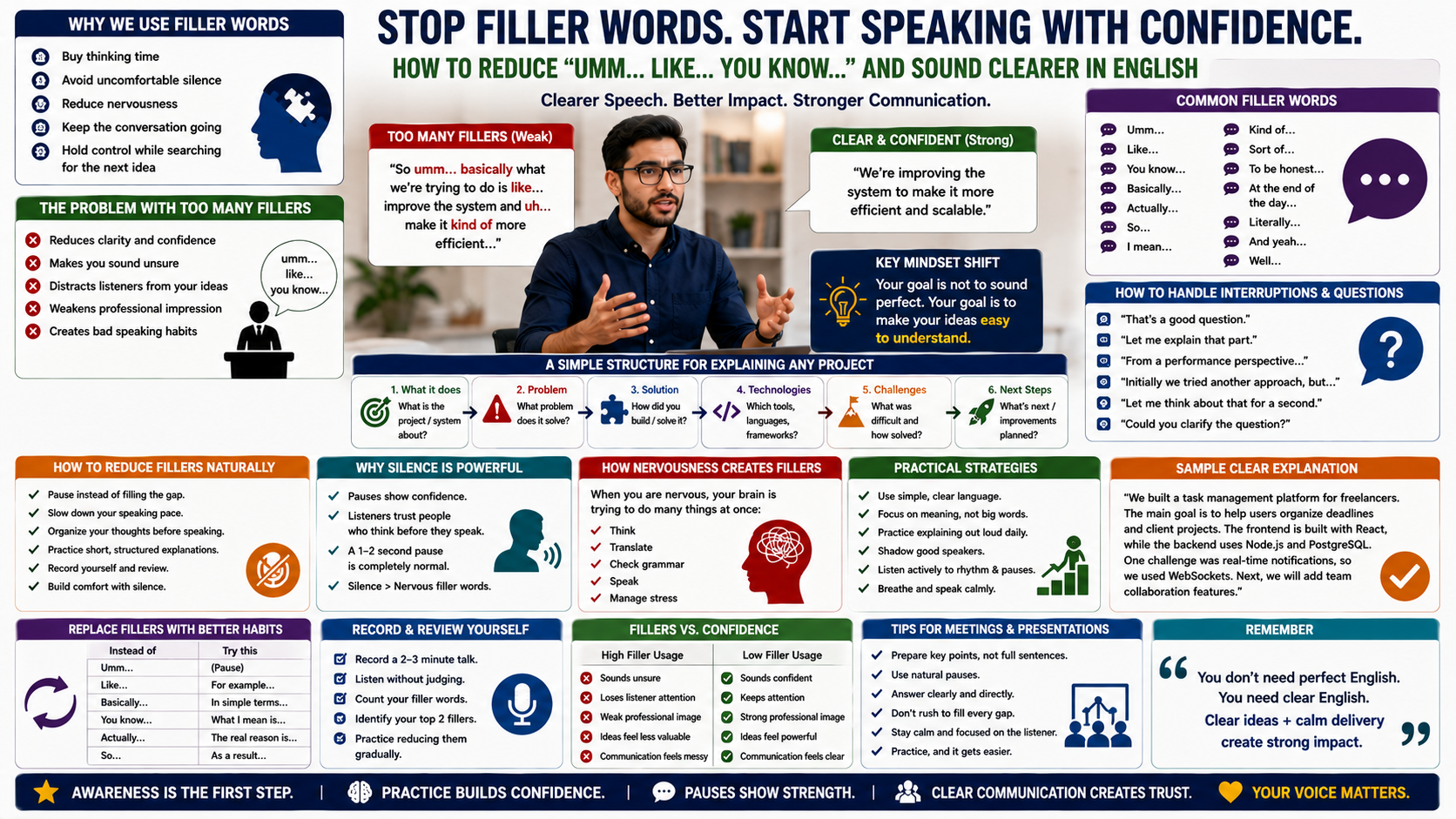
“So basically umm… what we’re trying to do is like… improve the system and uh… make it kind of more efficient…”
Now compare that with:
“We’re improving the system to make it more efficient and scalable.”
The second version sounds calmer.
Sharper.
More confident.
More trustworthy.
Even though the actual idea is almost identical.
That emotional difference matters enormously.
Because communication is not only about information.
It is also about perception.
And filler words heavily affect perception.
One important thing many learners misunderstand is why filler words happen in the first place. People often think filler words only appear because someone’s English is weak.
That is not true.
Actually, filler words usually appear because the brain is trying to buy thinking time during live conversation.
Your mouth keeps moving while your brain searches for the next idea.
That’s why filler words become stronger during:
stress,
nervousness,
public speaking,
live meetings,
unexpected questions,
or emotional pressure.
The brain wants to avoid silence.
So instead of pausing quietly, it fills the space automatically with verbal noise.
And honestly, silence scares many people much more than they realize.
A two-second pause can feel emotionally terrifying to nervous speakers.
Their brain immediately thinks:
“I need to keep talking.”
“If I pause, people will think I’m nervous.”
“If I stop speaking, the conversation will become awkward.”
So the filler words begin multiplying automatically.
But here’s something interesting.
Strong communicators are usually not afraid of small pauses.
That changes everything.
Because once you become emotionally comfortable with silence, filler words naturally decrease.
Actually, many confident speakers intentionally pause while thinking.
And those pauses often make them sound more intelligent and composed, not less.
This is a huge mindset shift for many learners.
Because they spend years trying to avoid pauses completely.
Meanwhile professional communicators understand something important:
Calm pauses sound more confident than nervous filler words.
There’s another important reality too.
Modern communication environments make filler words even more noticeable now.
Think about online meetings for a second.
In physical conversations, body language, movement, and environment soften speech imperfections slightly. But during Zoom calls, podcasts, YouTube videos, interviews, and remote work conversations, people focus heavily on voice patterns.
That means filler words become much more obvious psychologically.
Especially repeated ones.
For example, some people unconsciously say:
“Like” every few seconds.
Others constantly repeat:
“Basically.”
“Literally.”
“You know.”
“At the end of the day.”
“To be honest.”
“Kind of.”
“Sort of.”
Eventually listeners stop focusing on the message itself and start noticing the repetition pattern instead.
And honestly, this can affect professional perception more than people realize.
Not because filler words make someone unintelligent.
But because excessive filler words often signal nervousness, uncertainty, lack of preparation, or weak conversational control psychologically.
Another interesting thing is that filler words are deeply emotional habits.
Many learners try to remove them by forcing perfect speaking discipline immediately.
That usually fails.
Because filler words happen unconsciously.
You often do not even realize you are saying them while speaking.
That’s why awareness becomes the first major step.
Once people begin noticing their own filler patterns, improvement usually accelerates dramatically.
For example, one person may constantly say:
“Basically…”
Another may repeat:
“Actually…”
Another may overuse:
“You know what I mean…”
Another may use:
“Like…”
between almost every sentence.
Each person develops different verbal habits.
And honestly, many of these habits form because people copy conversational patterns from friends, social media, influencers, YouTube creators, workplace culture, or even anxiety-driven speaking behavior over time.
There’s another emotional layer too.
Many English learners accidentally use filler words because they are translating mentally while speaking.
Their brain needs extra processing time:
native language → English conversion → grammar checking → speaking.
So filler words become temporary bridges while the brain catches up.
That’s why spontaneous speaking often contains more fillers than prepared speaking.
And honestly, one of the biggest improvements learners experience during fluency development is not vocabulary growth.
It is smoother mental processing.
Because smoother thinking creates smoother speech.
Another thing people misunderstand is that removing filler words does not mean sounding robotic or unnaturally formal.
That’s important.
The goal is not becoming a machine.
Natural conversations still contain occasional pauses, reactions, and conversational softness.
The goal is reducing unnecessary verbal clutter.
That’s different.
Actually, strong communicators usually sound conversational, warm, and human while still speaking clearly.
They simply use silence more comfortably and choose words more intentionally.
This article is going to explore all of this deeply.
We are going to talk about why filler words happen psychologically, how nervousness affects speech patterns, how silence becomes emotionally uncomfortable, how to reduce filler words naturally, how to sound clearer during meetings and presentations, how to improve conversational rhythm, how to pause confidently, how to stop overusing common filler phrases, and how to sound more calm, professional, and intentional while speaking English.
Most importantly, we are going to approach this like a real human communication skill instead of a robotic speaking exercise.
Because honestly?
The goal is not sounding perfect.
The goal is sounding clear, calm, and confident without drowning your ideas inside unnecessary filler words.
Why Human Beings Use Filler Words Naturally
Filler words are not random accidents.
They usually serve psychological purposes during conversation.
The brain often uses fillers to:
buy thinking time,
avoid silence,
hold conversational control,
reduce nervousness,
or signal that speaking is continuing.
For example, when someone says:
“Umm…”
their brain is often still constructing the next sentence internally.
Without fillers, many people fear conversations will collapse into awkward silence.
This is why filler words increase dramatically during stress or live speaking situations.
Actually, even highly intelligent people use filler words when thinking under pressure.
The issue is not intelligence.
The issue is conversational awareness and emotional comfort.
Why Silence Feels So Uncomfortable
This is one of the biggest psychological reasons filler words become excessive.
Many people emotionally fear silence.
Even tiny pauses can feel uncomfortable internally.
Especially for nervous speakers.
But interestingly, listeners usually perceive pauses much more positively than speakers imagine.
A calm two-second pause often sounds thoughtful and controlled.
Meanwhile nervous filler words often sound uncertain.
Strong communicators understand this deeply.
They do not rush to fill every microsecond of silence.
They allow conversations to breathe naturally.
And honestly, that calmness creates authority automatically.
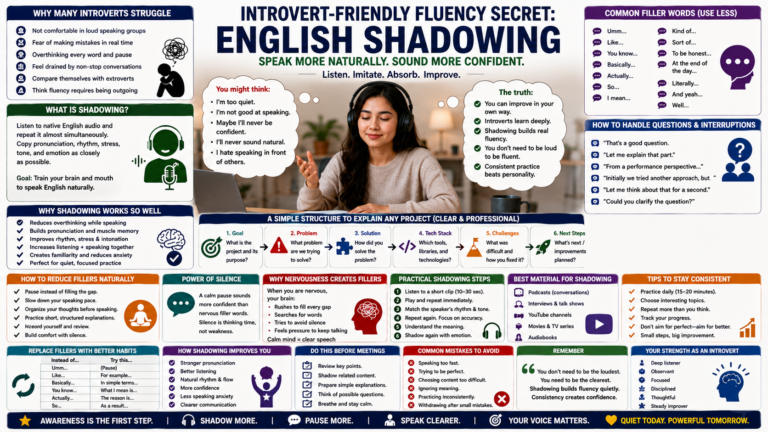
The Most Common English Filler Words
Different people develop different filler habits, but some extremely common examples include:
“Like…”
“Basically…”
“Actually…”
“You know…”
“I mean…”
“So…”
“Kind of…”
“Sort of…”
“To be honest…”
“At the end of the day…”
“Literally…”
“Uhh…”
“Umm…”
None of these words are automatically bad individually.
The problem is unconscious repetition.
Especially repetitive patterns every few seconds.
Why Nervousness Increases Filler Words Dramatically
When people become nervous, the brain speeds up emotionally while speech production struggles to keep up.
This creates verbal hesitation.
Many learners panic during:
meetings,
interviews,
presentations,
or public speaking.
So their brain inserts filler words automatically while searching for the next sentence.
For example:
“So umm… basically what I’m trying to say is…”
This usually happens because the speaker is thinking and speaking simultaneously under pressure.
And honestly, the faster someone tries to speak while nervous, the worse the filler problem usually becomes.
My Opinion
Honestly, one thing many learners desperately need to realize is this:
Pausing is not weakness.
Actually, calm pauses often sound more intelligent than constant speaking.
Strong communicators pause naturally because they trust themselves emotionally.
They do not panic every time silence appears for two seconds.
Meanwhile nervous speakers often fill every gap with verbal clutter because they fear losing conversational momentum.
But professionally, calm pauses usually create better communication rhythm.
Especially during presentations and meetings.
The Biggest Mistake People Make While Trying to Remove Fillers
Many learners try to completely eliminate all pauses immediately.
That usually creates robotic speech.
Or even worse:
mental panic.
Because now they are over-monitoring every sentence while speaking.
The goal is not perfection.
The goal is awareness and reduction.
Natural conversations still contain occasional conversational softness.
You are not trying to sound like AI.
You are trying to sound calmer and more intentional.
How Recording Yourself Changes Everything
One of the fastest ways to improve filler-word awareness is recording yourself speaking naturally.
Honestly, this feels uncomfortable initially.
But it works incredibly well.
Because most people have no idea how often they repeat certain phrases until they hear themselves objectively.
You may suddenly notice:
“Wow… I say ‘basically’ constantly.”
Or:
“I use ‘like’ after every sentence.”
Awareness creates improvement.
Without awareness, filler habits remain invisible.
Why Slower Speaking Reduces Fillers
Many people think fast speaking sounds fluent.
But nervous speed often increases filler words dramatically.
Because the brain cannot organize thoughts smoothly at that pace.
Slower speaking creates:
better sentence organization,
clearer thinking,
better breathing,
and fewer panic fillers.
Interestingly, calm speakers often sound more confident precisely because they are not rushing constantly.
Practical Strategies for Reducing Filler Words
1. Replace fillers with silence
Instead of:
“Umm…”
pause quietly for one second.
This feels uncomfortable initially but sounds much stronger professionally.
2. Slow down intentionally
Fast nervous speech creates more fillers.
Calmer pacing improves clarity naturally.
3. Finish thoughts mentally first
Many fillers appear because people begin speaking before organizing thoughts.
Take one second mentally before answering.
4. Record and review yourself
This dramatically improves awareness.
5. Practice short structured speaking
For example:
explain your day,
describe a movie,
summarize a project,
or discuss a topic for one minute calmly.
Structured speaking improves flow.
How Filler Words Affect Professional Communication
In casual friendships, filler words usually matter less.
But professionally, excessive fillers can weaken communication perception.
Especially during:
job interviews,
client meetings,
sales calls,
public speaking,
leadership discussions,
or presentations.
Because listeners subconsciously associate smoother speech with confidence and preparation.
Again, this does not mean perfection is required.
It simply means clarity affects perception psychologically.
Why Some Fillers Become Personal Habits
People often unconsciously adopt filler habits from:
friends,
social media creators,
podcasts,
coworkers,
or online culture.
For example, some internet cultures heavily overuse:
“Literally…”
“Honestly…”
“Basically…”
“Like…”
Over time, repetition becomes automatic.
That’s why conscious awareness matters so much.
How to Sound Natural Without Sounding Empty
Some learners overcorrect and suddenly sound overly stiff.
That’s not the goal either.
Natural communication still includes:
emotion,
warmth,
small reactions,
and conversational rhythm.
For example:
“That was honestly a difficult situation.”
This sounds natural.
The problem happens when:
“Honestly” appears every second sentence unconsciously.
Balance matters.
The Relationship Between Confidence and Fillers
Interestingly, filler words often decrease automatically as confidence increases.
Because emotionally comfortable speakers trust silence more.
They stop fearing conversational pauses.
They stop mentally rushing every sentence.
And gradually speech becomes calmer naturally.
That’s why confidence development improves communication rhythm tremendously.
How Introverts Often Experience Fillers Differently
Many introverts actually use fewer filler words during calm one-on-one conversations but struggle more during high-pressure group speaking situations.
Especially when interrupted frequently.
Or when speaking spontaneously.
This is normal.
Because conversational pressure changes mental processing speed.
Prepared environments usually create smoother speech for many introverts.
How Social Media Changed Speaking Habits
Modern internet culture increased filler-word usage massively.
Especially words like:
“Literally…”
“Like…”
“Honestly…”
“Basically…”
Because conversational online content rewards casual emotional speaking styles.
Many people unconsciously absorb those patterns daily through YouTube, TikTok, podcasts, and streaming culture.
Awareness matters more than imitation.
FAQs
Are filler words always bad?
No. Occasional filler words are completely normal in human conversation. The issue is excessive unconscious repetition.
Why do I use more fillers when nervous?
Because your brain is trying to buy thinking time while avoiding silence under pressure.
How can I notice my own filler habits?
Recording yourself speaking is one of the fastest and most effective methods.
Should I remove all filler words completely?
Not necessarily. Natural speech still includes occasional conversational softness and pauses. The goal is reduction, not robotic perfection.
Why do pauses feel uncomfortable?
Many people emotionally associate silence with awkwardness or conversational failure. But listeners usually perceive calm pauses positively.
Does speaking slowly really help?
Yes. Slower speech improves thought organization and reduces panic fillers significantly.
Which filler word is the worst?
No single filler word is automatically terrible. Problems happen when repetition becomes excessive and distracting.
Can filler words affect professionalism?
Yes, especially during interviews, presentations, meetings, or leadership communication where clarity strongly affects perception.
Why do I sound robotic when trying to avoid fillers?
Because you are probably over-monitoring your speech too aggressively. Natural communication still needs emotional rhythm and flexibility.
What is the fastest way to improve?
Awareness + repetition. Record yourself, identify patterns, slow down slightly, and become comfortable with silence gradually
CONCLUSION
Reducing filler words is not really about becoming a “perfect speaker.”
It is about becoming a calmer speaker.
That distinction matters enormously.
Because most excessive filler words are not caused by lack of intelligence or weak vocabulary.
They are caused by nervousness, mental rushing, fear of silence, and unconscious conversational habits.
And honestly, once people understand this psychologically, improvement becomes much easier.
You stop attacking yourself every time you say:
“Umm…”
Or:
“Like…”
Instead, you begin noticing patterns calmly.
That awareness changes everything.
Because communication improvement usually begins with observation first.
Then slowly, something interesting happens.
You become more comfortable pausing.
You stop rushing every sentence.
You organize thoughts more clearly.
You stop panicking during small silences.
And gradually your speech starts sounding calmer, clearer, and more intentional naturally.
Not robotic.
Not fake.
Just more controlled.
And honestly, that emotional calmness affects communication far beyond filler words themselves.
It improves meetings.
Presentations.
Interviews.
Client conversations.
Public speaking.
Leadership communication.
Even everyday confidence.
Because strong communication is not about speaking nonstop.
Sometimes the most confident speakers are simply the people who are no longer afraid of silence.