How to Ask for a Budget Hike or Resources for Your Project – Professionally in English
Most emotionally uncomfortable professional conversations many employees, freelancers, project managers, startup founders, consultants, developers, team leads, marketers, and agency professionals eventually face is asking for more money, more resources, a larger budget, additional staffing, better tools, extended timelines, or stronger operational support for a project.
Honestly, even highly experienced professionals sometimes feel nervous before these conversations because discussions involving money, resources, staffing, budgets, and limitations naturally create psychological pressure. Human beings often associate these conversations with judgment, risk, workplace hierarchy, performance evaluation, and professional reputation. Even when someone logically understands that the request is reasonable, emotionally the situation can still feel stressful.
When English is not your first language, that pressure often becomes even heavier because now your brain is not only managing the actual business discussion itself, but also trying to manage:
professional wording,
tone,
clarity,
confidence,
grammar,
emotional balance,
workplace politics,
and communication strategy
all at the same time.
Many professionals internally know their project genuinely needs more support.
Maybe the current timeline is unrealistic.
Maybe the team is overloaded.
Maybe the client expectations expanded far beyond the original agreement.
Maybe the project scope changed dramatically halfway through development.
Maybe one developer is doing the work of three people.
Maybe testing quality is suffering because there is not enough manpower.
Maybe the marketing budget is too limited to achieve expected results.
Maybe the infrastructure costs increased unexpectedly.
Maybe additional software tools are now necessary.
Maybe burnout is beginning to affect team performance.
But despite understanding these realities clearly, many professionals still hesitate to speak up.
Why?
Because emotionally they fear things like:
“What if they think I’m making excuses?”
“What if I sound weak?”
“What if management thinks I’m incompetent?”
“What if the client gets angry?”
“What if they reject the request immediately?”
“What if my English sounds unprofessional?”
“What if asking for more support damages my reputation?”
This hesitation is incredibly common in international workplaces.
A freelancer may realize the client’s expectations now require double the original workload but still avoid discussing pricing because they fear losing the client completely.
A project manager may notice that the current team cannot realistically maintain delivery quality under the existing deadline but continue struggling silently because they do not want leadership to think they are “negative.”
A startup employee may understand that additional infrastructure investment is necessary for scaling but feel uncomfortable bringing financial concerns into meetings.
A software engineer may realize backend architecture problems require additional technical support but stay quiet because they fear sounding incapable.
Over time, this silence often creates much larger problems.
Deadlines begin slipping.
Stress increases.
Quality decreases.
Burnout grows.
Communication becomes tense.
Clients become frustrated.
And eventually, the conversation everyone avoided emotionally becomes unavoidable anyway.
This is why mature professional communication matters so much.
One of the biggest misunderstandings many people have is believing that asking for additional resources automatically sounds negative, demanding, or problematic.
But honestly, healthy professional environments usually expect realistic discussions about:
budgets,
timelines,
staffing,
technical limitations,
workflow capacity,
resource allocation,
and operational risks.
Experienced managers understand something extremely important:
Underfunded or understaffed projects often become far more expensive later through:
missed deadlines,
employee burnout,
technical failures,
client dissatisfaction,
quality issues,
poor scalability,
rework,
and operational chaos.
Strong companies usually prefer realistic communication early rather than hidden problems later.
However, the way these conversations are communicated matters enormously.
There is a massive emotional difference between sounding emotionally frustrated and sounding professionally solution-oriented.
For example:
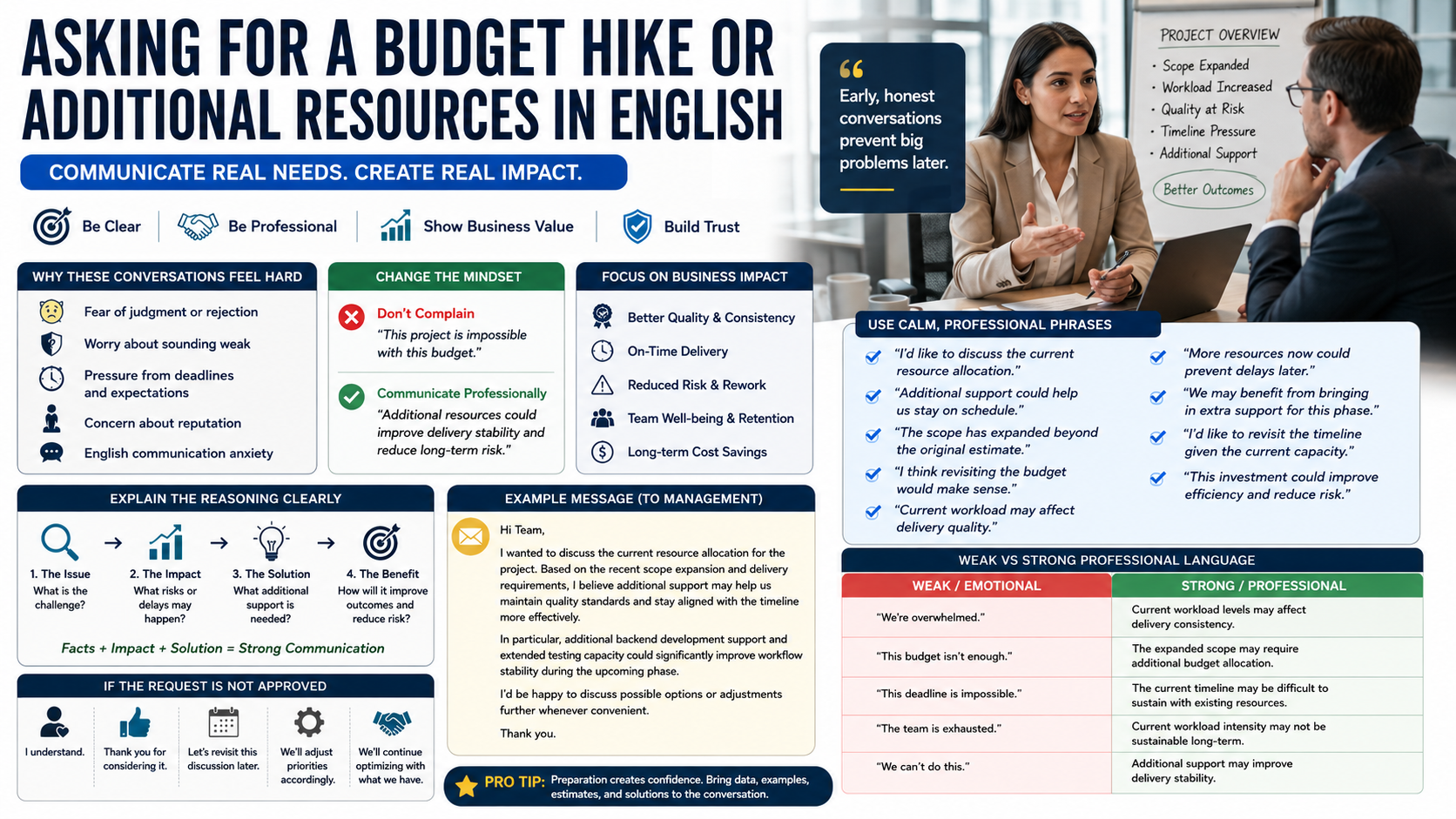
“This project is impossible with the current budget.”
feels emotionally heavy and resistant.
Meanwhile:
“I think additional resources could significantly improve delivery stability and reduce long-term operational risk.”
sounds calmer, more strategic, and more collaborative.
Both sentences discuss the same core issue.
But emotionally they create completely different reactions.
That emotional framing matters enormously in professional English communication.
Strong workplace communication is not only about grammar or vocabulary.
It is also about emotional positioning.
Professional communicators understand how to discuss difficult realities without creating unnecessary emotional tension.
They focus on:
solutions,
outcomes,
efficiency,
risk management,
sustainability,
quality,
and realistic planning.
Another major challenge many professionals face during these discussions is guilt.
Some people internally feel uncomfortable asking for more support because they worry it sounds selfish or demanding.
But honestly, asking for realistic project support is often part of responsible professional leadership.
Imagine a development team trying to launch a highly complex platform with half the required staffing.
At first, everybody may stay optimistic.
People work late.
Meetings remain positive.
Deadlines still appear “possible.”
But eventually:
bugs increase,
quality drops,
stress grows,
testing becomes rushed,
team morale weakens,
and burnout begins appearing.
In situations like this, early honest communication would have been far healthier than silent suffering.
Mature professionals usually understand that realistic planning protects both the business and the team long-term.
Another thing that surprises many English learners is that professional budget discussions are usually calmer and more logical than they emotionally imagine beforehand.
People often mentally prepare for conflict before the conversation even begins.
Their mind creates scenarios like:
“What if they reject everything immediately?”
“What if they think I’m complaining?”
“What if they challenge my competence?”
“What if I freeze during the meeting?”
“What if my English becomes awkward under pressure?”
Because of these fears, some professionals either avoid the discussion entirely or communicate emotionally instead of strategically.
But strong workplace communication focuses less on emotional frustration and more on:
facts,
capacity,
business outcomes,
resource allocation,
project impact,
timelines,
operational efficiency,
and risk prevention.
For example:
Instead of:
“We’re overwhelmed.”
A stronger professional version may sound like:
“Current workload levels may affect long-term delivery consistency.”
Notice the emotional difference.
Calmer.
More objective.
More professional.
And honestly, this communication style often creates better responses because it frames the issue around operational success rather than personal frustration.
Another extremely important thing to understand is that confidence during budget discussions does not come from sounding aggressive.
Some people mistakenly believe they must sound forceful or intimidating to be taken seriously.
But real professional confidence usually sounds:
calm,
prepared,
organized,
logical,
clear,
and emotionally controlled.
Strong communicators explain:
what the issue is,
why additional support is needed,
what operational risks currently exist,
what impact additional support may create,
and how the business benefits overall.
That structure creates credibility.
And honestly, credibility matters enormously during money conversations.
This article is going to explore how to ask for a budget hike or additional project resources professionally in English, how to explain operational limitations clearly, how to sound confident without sounding demanding, how to discuss staffing and timelines realistically, how to connect requests to business outcomes, how to handle rejection professionally, and how to communicate difficult workplace realities calmly and intelligently.
Most importantly, we are going to approach this like real-world professional communication instead of robotic textbook business English.
Because honestly?
The ability to discuss difficult operational realities calmly and professionally is one of the strongest workplace communication skills a person can develop today.
Why Budget Conversations Feel Emotionally Difficult
Money conversations naturally create emotional pressure because resources often connect directly to:
power,
responsibility,
performance,
expectations,
and workplace hierarchy.
People worry about being judged.
Especially in professional environments.
Many employees silently fear:
“If I ask for more resources, maybe they’ll think I’m failing.”
But experienced professionals usually understand something important:
Even highly skilled teams have limitations.
Sometimes additional developers are genuinely necessary.
Sometimes project scope expands unexpectedly.
Sometimes infrastructure costs change.
Sometimes client expectations increase beyond original agreements.
Sometimes deadlines become unrealistic after operational changes.
These situations are normal in professional environments.
The real issue is not whether challenges exist.
The real issue is whether people communicate those challenges intelligently.
Understanding the Difference Between Complaining and Professional Resource Discussion
One of the biggest communication mistakes professionals make is emotionally framing resource conversations like personal complaints instead of business discussions.
For example:
Emotional Complaint
“This project is becoming too stressful.”
Professional Discussion
“Current workload levels may affect delivery stability moving forward.”
The second version sounds more strategic and solution-oriented.
Strong professionals usually separate emotional frustration from operational discussion.
That does not mean pretending everything feels fine internally.
It simply means communicating concerns in a structured professional way.
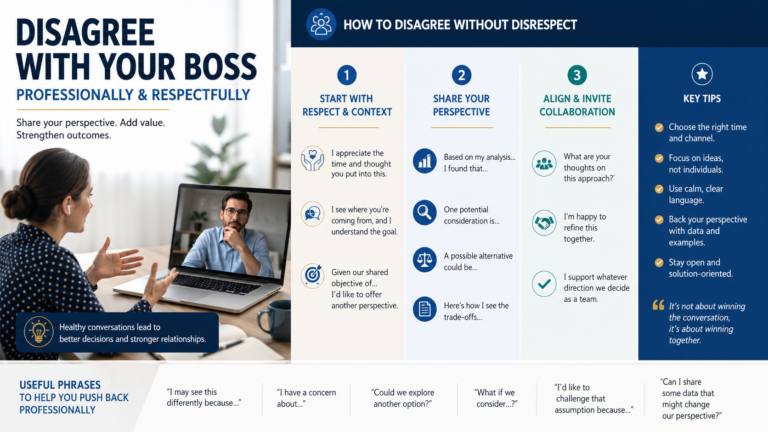
Practical English Phrases for Asking for More Budget or Resources
Useful workplace phrases include:
“I think additional resources could improve delivery efficiency.”
“We may need extra support to maintain quality standards.”
“Based on the current workload, additional staffing may help us stay on schedule.”
“I’d like to discuss the possibility of revisiting the project budget.”
“There are a few operational limitations currently affecting progress.”
“I believe additional investment now could help prevent delays later.”
“The project scope has expanded beyond the original estimate.”
“I’d like to revisit the current resource allocation.”
“We may benefit from bringing in additional support for this phase.”
“I think expanding the team slightly could reduce delivery pressure significantly.”
Notice how these phrases sound calm and professional instead of emotionally demanding.
That emotional tone matters heavily.
How to Explain Business Reasoning Clearly
One major difference between emotional requests and professional requests is reasoning.
Strong communicators explain:
why the request matters,
what issue it solves,
what risk it reduces,
and what benefit it creates.
For example:
“If we bring in one additional backend developer, we can improve testing speed and reduce deployment delays significantly.”
This sounds much stronger than simply saying:
“We need more people.”
Professional communication connects requests directly to business outcomes.
Managers and clients usually respond more positively when they understand:
the efficiency gain,
the operational value,
the quality improvement,
the risk reduction,
or the long-term business impact.
My Opinion
Honestly, one thing I’ve noticed repeatedly in professional environments is that emotionally calm communication usually creates more credibility than aggressive pressure.
Some people believe confidence means sounding emotionally forceful during budget discussions.
But real professionalism usually looks much calmer.
Prepared.
Structured.
Logical.
Solution-oriented.
Respectful.
Professionals who explain concerns clearly without emotional chaos often sound more trustworthy automatically.
And honestly, trust matters enormously during financial or operational discussions.
How to Discuss Unrealistic Timelines Professionally
Timeline conversations are emotionally sensitive because deadlines often involve pressure from leadership, clients, or business expectations.
Instead of saying:
“This deadline is impossible.”
A stronger professional version may sound like:
“Given the current scope and available resources, maintaining the current timeline may become challenging without affecting delivery quality.”
This sounds calmer and more collaborative.
Professional communication often emphasizes:
quality,
sustainability,
risk management,
and operational realism.
That framing sounds mature professionally.
How to Sound Confident Without Sounding Demanding
Many learners struggle balancing confidence and politeness during resource discussions.
The key is calm clarity.
For example:
“I believe additional support would significantly improve project stability.”
This sounds confident because the speaker communicates clearly and directly.
Meanwhile aggressive communication often sounds emotionally absolute:
“We absolutely need this immediately.”
Professional confidence usually leaves room for discussion while still communicating seriousness.
How to Handle Rejection Professionally
Not every request gets approved immediately.
And honestly, mature communication also includes handling rejection calmly.
Useful responses include:
“I understand the current constraints.”
“Thank you for considering the request.”
“Would it make sense to revisit this discussion later?”
“I appreciate the conversation.”
“Understood. We’ll continue optimizing with the available resources.”
“We’ll adjust priorities accordingly.”
Professionalism during rejection matters heavily because emotional reactions can damage long-term trust.
Why Preparation Improves Confidence Dramatically
Many people enter difficult conversations emotionally unprepared.
Strong professionals often prepare:
workload examples,
timeline projections,
business impact,
resource estimates,
risk analysis,
operational data,
and expected outcomes beforehand.
Preparation reduces nervousness because your brain feels more organized.
And honestly, organized communication usually sounds more confident automatically.
How to Discuss Team Burnout Professionally
Burnout discussions require emotional balance.
Instead of saying:
“The team is exhausted.”
A calmer professional approach may sound like:
“Current workload intensity may not be sustainable long-term without additional support.”
This focuses on sustainability rather than emotional collapse.
Professional language often sounds calmer while still communicating seriousness.
Example Professional Budget Discussion Messages
Here are some realistic workplace examples.
Example 1 — Email to Management
Hi Team,
I wanted to discuss the current resource allocation for the project. Based on the recent scope expansion and delivery requirements, I believe additional support may help us maintain quality standards and stay aligned with the timeline more effectively.
In particular, additional backend development support and extended testing capacity could significantly improve workflow stability during the upcoming phase.
I’d be happy to discuss possible options or adjustments further whenever convenient.
Thank you.
Example 2 — Slack Message
Just wanted to raise one operational concern regarding the current workload. Based on the recent increase in project scope, I think additional support during this phase could help us maintain delivery quality and reduce timeline pressure a bit.
Example 3 — Client Pricing Revision Message
After reviewing the updated requirements, I realized the current scope has expanded significantly beyond the original estimate. I’d love to continue supporting the project, but I think it would make sense for us to revisit the budget and timeline slightly so we can maintain the quality level properly.
These examples sound calm, professional, collaborative, and business-focused.
How to Sound More Natural During Workplace Discussions
Real professional English often includes softer conversational phrases like:
“From my perspective…”
“At the moment…”
“One concern I have is…”
“Realistically speaking…”
“At least based on the current workload…”
“I think it may help if…”
“These are just a few operational concerns I wanted to raise.”
These expressions make communication feel more human and conversational instead of robotic.
Why Silence Often Creates Bigger Problems
One dangerous workplace habit is silent suffering.
Many professionals avoid difficult conversations until problems become emergencies.
But mature professionals usually communicate risks early.
Why?
Because operational problems rarely improve through silence alone.
Early communication often prevents:
burnout,
missed deadlines,
quality failures,
client frustration,
and workflow chaos later.
Strong communication protects projects long-term.
How Managers Usually View Resource Discussions
Many learners imagine managers automatically dislike resource discussions.
But experienced managers often expect these conversations.
Why?
Because resource planning is part of leadership and project management.
Strong managers usually prefer realistic operational visibility instead of hidden problems exploding later unexpectedly.
The Difference Between Emotional Pressure and Professional Urgency
Professional urgency does not require emotional panic.
Compare these examples.
Emotional Pressure
“This is becoming a disaster.”
Professional Urgency
“If we continue at the current capacity level, delivery risk may increase significantly over the next phase.”
The second version sounds calmer while still communicating seriousness clearly.
That balance is powerful professionally.
Weak vs Strong Professional Budget Language
| Emotionally Weak or Reactive | Strong Professional Communication |
|---|---|
| “We’re overwhelmed.” | “Current workload levels may affect delivery consistency.” |
| “This budget isn’t enough.” | “The expanded scope may require additional budget allocation.” |
| “We can’t do this.” | “Additional support may improve delivery stability.” |
| “The deadline is impossible.” | “The current timeline may be difficult to sustain with existing resources.” |
| “Nobody is helping.” | “Additional staffing could improve workflow efficiency.” |
| “The team is exhausted.” | “Current workload intensity may not be sustainable long-term.” |
| “This project is becoming chaotic.” | “Operational complexity has increased significantly during this phase.” |
Real-Life Professional Situations Where This Skill Matters
Budget and resource discussions appear constantly in:
software development,
marketing agencies,
freelancing,
consulting,
construction,
startups,
product management,
creative industries,
operations,
project leadership,
and remote work environments.
Whether someone works with clients, teams, executives, or stakeholders, realistic resource communication affects long-term project success heavily.
How Confidence Develops Over Time
At first, these conversations may feel intimidating.
That is normal.
Money discussions naturally create pressure.
But repeated practice changes communication confidence gradually.
Eventually:
you stop fearing every difficult discussion,
you stop emotionally avoiding operational realities,
you stop seeing resource conversations as personal weakness,
and you begin approaching them strategically instead.
That shift changes professional communication dramatically.
FAQs
Is asking for more budget unprofessional?
Not at all. Mature workplaces often expect realistic discussions about staffing, resources, timelines, and operational planning.
How can I ask for more resources politely?
Focus on project outcomes and operational benefits instead of emotional frustration.
What if I sound demanding in English?
Use calm collaborative phrasing like:
“I think additional support could help improve delivery stability.”
Should I mention project risks directly?
Yes, but professionally. Focus on operational impact instead of emotional panic.
How can I sound more confident during these conversations?
Preparation creates confidence. Organize reasoning, examples, risks, and outcomes beforehand.
What if my manager rejects the request?
Respond calmly and professionally. Resource discussions are normal business conversations, not personal attacks.
Is it okay to discuss burnout or workload pressure?
Absolutely, especially if it affects quality, timelines, sustainability, or operational performance.
How do I avoid sounding emotional?
Focus on facts, business impact, workflow, timelines, and solutions instead of frustration or blame.
Why do money conversations feel stressful?
Because budgets, resources, and staffing naturally involve hierarchy, expectations, responsibility, and performance pressure.
What is the most important communication skill during these discussions?
Probably calm structured communication combined with clear business reasoning.
Real-Life Professional Use
The ability to discuss budget increases or additional resources professionally affects far more than individual projects.
This communication skill influences:
leadership credibility,
project trust,
team sustainability,
client relationships,
workplace reputation,
and long-term career growth.
Strong professionals are not people who silently accept impossible situations forever.
Often, they are the people who identify operational risks early, communicate concerns calmly, and discuss realistic solutions before problems become crises.
That is real professional maturity.
CONCLUSION
Asking for a budget hike or additional project resources in English may feel intimidating initially, especially when money, timelines, expectations, hierarchy, and workplace pressure all combine together emotionally. But honestly, mature professional communication is not about silently accepting unrealistic situations forever.
It is about learning how to discuss operational realities calmly, intelligently, and respectfully.
Strong professionals are not people who pretend everything is manageable all the time.
Very often, they are the people who identify risks early, communicate limitations honestly, and discuss realistic solutions before situations become disasters.
That communication style creates trust.
And thankfully, this skill improves dramatically with practice.
The more you participate in discussions involving budgets, staffing, planning, resources, timelines, and operational strategy, the more emotionally normal these conversations begin to feel.
Eventually, instead of panicking internally every time you need additional support, your mindset slowly changes toward:
“How can I communicate this clearly and professionally?”
And honestly, that shift changes everything professionally.
Because people stop experiencing you as someone emotional, resistant, or demanding.
Instead, they begin seeing you as someone:
thoughtful,
strategic,
realistic,
solution-oriented,
calm under pressure,
and professionally responsible.
And honestly?
That communication style earns long-term respect in almost every professional environment.