The Virtual Grid Silence: How to Interrupt Politely in Zoom and Teams Meetings Without Sounding Rude or Freezing on Laggy Calls
Modern professional life has changed dramatically over the past few years. Earlier, meetings mostly happened inside offices, conference rooms, coworking spaces, classrooms, or client cabins where people could rely heavily on physical presence, body language, eye contact, facial expressions, hand movements, and natural conversational energy. If someone wanted to speak, they could slightly lean forward, raise a finger gently, make eye contact with the speaker, or use tiny physical cues to enter the conversation naturally. Human communication worked in a smoother and more instinctive way because people were physically present together.
But virtual meetings changed everything.
Today millions of professionals spend huge parts of their daily life inside Zoom calls, Google Meet discussions, Microsoft Teams meetings, Slack huddles, online classrooms, webinars, remote interviews, brainstorming sessions, and international client calls. And honestly, virtual communication often feels emotionally harder than real-life communication because online conversations remove many natural human signals that help conversations flow smoothly.
Suddenly people start speaking over each other accidentally.
Someone’s microphone cuts out.
Another person remains on mute unknowingly.
Internet lag creates awkward pauses.
Two participants start speaking together.
One person dominates the discussion without realizing it.
Another participant waits silently for ten minutes trying to find the “perfect moment” to speak.
And somewhere inside that virtual grid of faces, many English learners sit quietly with valuable thoughts in their mind but hesitate to speak because they are afraid of interrupting incorrectly.
This is one of the most common modern communication struggles.
Honestly, many intelligent professionals are not silent because they lack ideas. They remain silent because they fear the social risk of interruption.
Their mind keeps creating stressful thoughts:
“What if I interrupt at the wrong moment?”
“What if my English sounds rude?”
“What if everyone suddenly becomes silent awkwardly?”
“What if I forget my sentence halfway?”
“What if my manager thinks I’m impatient?”
“What if I accidentally cut off a senior employee?”
“What if my pronunciation becomes unclear because I panic?”
“What if I sound aggressive without realizing it?”
Because of these fears, many learners continuously delay participation during meetings. They internally rehearse sentences again and again while the discussion keeps moving forward rapidly. By the time they finally feel mentally ready to speak, the conversation has already shifted completely to another topic.
This situation happens constantly in real remote workplaces.
A software engineer notices a technical risk during deployment planning but stays silent because another senior developer keeps talking continuously.
A marketing employee wants to correct incorrect campaign numbers during a presentation but hesitates because interrupting feels uncomfortable.
A freelancer realizes the client misunderstood project timelines but waits too long trying to sound “perfect.”
A student attending an international online class wants clarification but becomes nervous because other students sound more fluent.
A team member has an excellent idea but loses the opportunity because the discussion moves too quickly.
Over time, this creates an invisible professional problem.
People start assuming quieter participants are less engaged, less confident, less prepared, or less leadership-oriented — even when the opposite may actually be true internally.
This is why learning polite interruption is not just a language skill anymore.
It is a visibility skill.
A participation skill.
A confidence skill.
And honestly, in remote work environments, it has become an important career skill too.
One major reason learners struggle with this is because traditional English education almost never teaches interruption properly. Most classrooms focus heavily on grammar exercises, vocabulary memorization, essays, formal presentations, or prepared speeches. But real meetings are messy human conversations. People interrupt. People overlap. People react emotionally. People change topics suddenly. Someone remembers an important detail halfway through another person’s explanation. Someone urgently needs clarification before the meeting moves forward incorrectly.
Real professional communication is dynamic, emotional, imperfect, and fast-moving.
And honestly?
Strong communicators are not people who speak perfectly all the time.
Strong communicators are people who know how to enter conversations naturally without emotionally panicking.
Another important misunderstanding many learners have is believing interruption itself is rude.
This is not true.
Aggressive interruption is rude.
Disrespectful interruption is rude.
Emotionally sharp interruption is rude.
But polite interruption is completely normal in professional communication.
In fact, productive meetings often depend on respectful interruption.
Imagine a meeting where nobody ever interrupts.
Misunderstandings would continue unchecked.
Incorrect information would remain uncorrected.
Clarification would never happen.
Time-sensitive problems would be ignored.
Meetings would become long monologues instead of collaborative discussions.
Healthy professional communication requires balanced participation.
And honestly, native English speakers interrupt each other constantly in meetings — but they often soften interruptions emotionally using respectful conversational language.
For example:
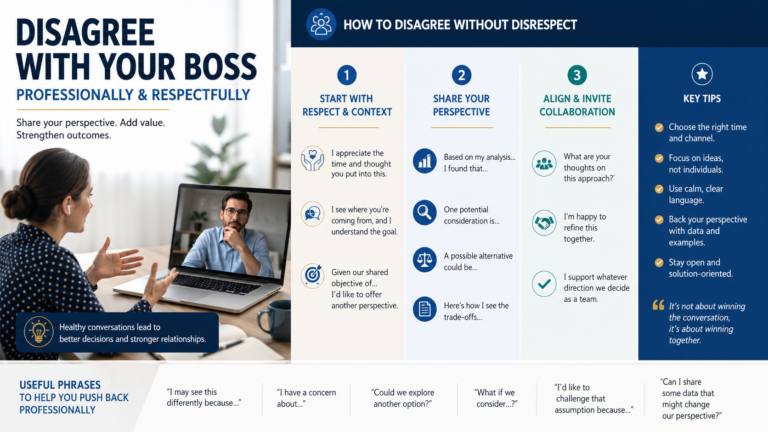
“Sorry to interrupt briefly…”
“Can I quickly add something here?”
“Before we move on…”
“Just to clarify…”
“I’d like to mention one thing…”
These phrases create emotional softness.
They tell the listener:
“I respect you.”
“I’m not attacking you.”
“I simply need to enter the conversation briefly.”
That emotional framing changes everything.
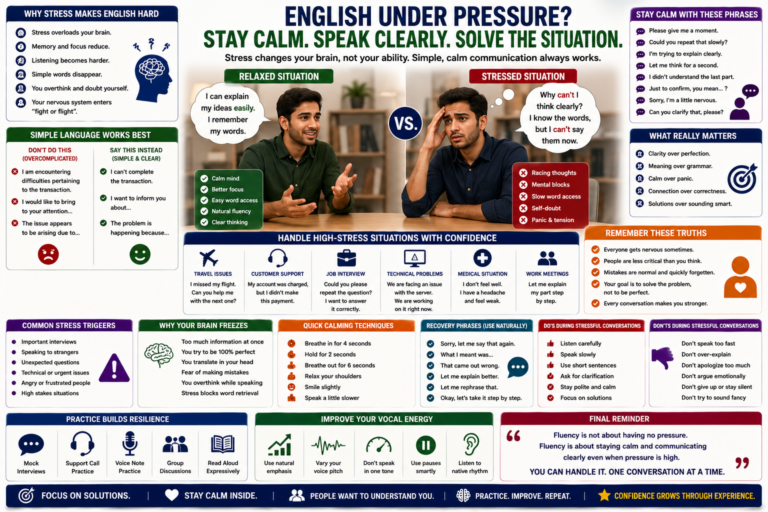
Another challenge unique to virtual meetings is technological awkwardness. In face-to-face meetings, humans naturally sense conversational rhythm better. But online meetings damage conversational timing because delays make people unsure when someone has actually finished speaking. Sometimes participants accidentally interrupt due to audio lag. Sometimes silence feels longer online than it actually is. Sometimes people hesitate too long because they fear speaking over others digitally.
This creates emotional overthinking.
Many learners wait for a “perfect opening” that never arrives.
Meanwhile more conversationally confident participants continue speaking naturally without overanalyzing every pause.
This is why interruption confidence matters professionally.
People who can enter discussions smoothly often appear:
- more engaged,
- more leadership-oriented,
- more collaborative,
- more confident,
- and more professionally active.
That does not mean dominating meetings aggressively.
It simply means participating visibly instead of disappearing silently.
Another important thing to understand is that interruption becomes emotionally easier once you stop viewing it as “disturbing” the conversation and start viewing it as “joining” the conversation.
That mindset shift changes everything psychologically.
You are not attacking the speaker.
You are contributing to shared communication.
And honestly, once learners begin practicing polite interruption structures repeatedly, the emotional fear decreases dramatically. Your brain slowly realizes:
- interruption is survivable,
- conversations do not collapse,
- professionals interrupt respectfully all the time,
- and meetings are naturally imperfect environments anyway.
This article is going to explore:
- how to interrupt someone politely in virtual meetings,
- how to sound confident without sounding aggressive,
- how to handle timing naturally,
- how to participate more actively,
- how to manage overlapping conversations,
- how to ask clarification questions professionally,
- how to stop freezing mentally during meetings,
- and how to communicate more naturally in fast-moving online discussions.
Most importantly, we are going to approach this like real human communication instead of robotic textbook English.
Because honestly?
One of the biggest differences between passive professionals and confident professionals is often the ability to politely say:
“Sorry to interrupt for a second, but I’d like to add something here.”
Why Interrupting Feels Emotionally Uncomfortable
Human beings naturally avoid social tension.
Most people do not enjoy cutting into someone else’s speech because emotionally it can feel disrespectful or confrontational. Even highly fluent English speakers sometimes hesitate before interrupting during meetings.
For English learners, the pressure becomes much heavier because interruption combines:
- language pressure,
- timing pressure,
- confidence pressure,
- social pressure,
- workplace hierarchy,
- and fear of embarrassment.
The brain starts multitasking emotionally.
You are:
- listening,
- translating mentally,
- planning your response,
- worrying about pronunciation,
- monitoring meeting dynamics,
- and searching for the right moment simultaneously.
This mental overload creates hesitation.
Many learners internally say:
- “Maybe I’ll speak later.”
- “I don’t want to sound rude.”
- “I’ll wait until they finish.”
But virtual meetings often move too quickly for endless waiting.
By the time you feel ready, the topic changes completely.
This repeated experience slowly damages participation confidence.
That is why interruption should be practiced like a communication skill — not feared like a social crime.
Understanding the Difference Between Aggressive and Professional Interruption
Not all interruptions sound emotionally identical.
The wording changes the emotional energy completely.
| Aggressive Interruption | Professional Interruption |
|---|---|
| “No, that’s wrong.” | “Sorry to interrupt, but I think there may be another perspective.” |
| “Wait, listen.” | “Can I quickly add something here?” |
| “You’re misunderstanding.” | “Just to clarify something briefly…” |
| “Stop for a second.” | “Before we move forward, I wanted to mention one thing.” |
Professional interruption usually includes:
- softening phrases,
- respectful tone,
- calm delivery,
- and collaborative energy.
That emotional softness matters enormously in workplace communication.
Why Timing Matters in Virtual Meetings
Timing strongly affects how interruption feels emotionally.
Strong communicators usually interrupt:
- during natural breathing pauses,
- after completed thoughts,
- during topic transitions,
- when clarification becomes urgent,
- or before important misunderstandings continue.
Random interruption in the middle of emotional speaking often feels harsher.
But waiting forever creates another problem:
you disappear from the conversation completely.
This balance improves naturally with practice.
Honestly, there is no perfect timing system.
Virtual meetings are naturally messy sometimes.
The goal is respectful participation, not robotic perfection
Practical English Phrases for Polite Interruption
These phrases are extremely common in real professional meetings.
Soft Professional Interruptions
- “Sorry to interrupt briefly…”
- “Can I quickly add something?”
- “If I may jump in for a second…”
- “Before we move on…”
- “I’d like to mention one thing here.”
- “Could I add a quick point?”
- “Just to clarify something quickly…”
Clarification Interruptions
- “Sorry, can I confirm something?”
- “I may have misunderstood, but…”
- “Can you clarify that part again?”
- “Just to make sure I understood correctly…”
Technical/Remote Meeting Interruptions
- “Sorry, your audio cut out for a second.”
- “I think there may be a connection delay.”
- “Could you repeat the last part?”
- “I missed that because of the audio lag.”
These phrases sound natural because they soften entry into the conversation
My Opinion
Honestly, many learners overthink interruption far too much.
They imagine professional meetings as perfectly organized conversations where everybody politely waits in silence for ideal speaking turns.
Real meetings are not like that.
Especially online.
People overlap accidentally constantly.
Someone unmutes late.
Someone interrupts unintentionally.
Another person forgets their point and jumps in quickly.
A manager suddenly changes direction.
A client speaks emotionally.
Meetings are human environments, not scripted performances.
The goal is not perfect interruption timing.
The goal is calm respectful participation.
That mindset shift helps enormously.
How to Interrupt Someone Who Talks Too Much
Sometimes participants dominate discussions unintentionally.
Maybe they are excited.
Maybe nervous.
Maybe unaware of time.
Strong communicators redirect politely instead of aggressively cutting them off.
Natural Professional Examples
- “Those are great points. Could I quickly add something?”
- “Sorry to jump in, but I think this connects to the earlier issue too.”
- “If I could build on that briefly…”
- “Can I pause you there for one second?”
Notice something important:
the interruption acknowledges the speaker respectfully first.
This reduces defensiveness dramatically.
How to Interrupt for Clarification
Clarification interruptions are extremely common professionally.
In fact, they often improve meeting quality significantly.
Useful Clarification Phrases
- “Sorry, just to clarify, are we discussing the updated version?”
- “Can I quickly confirm the timeline?”
- “Before we continue, I want to make sure I understood correctly.”
- “Sorry, I may have missed that part.”
Clarification-focused interruption usually feels acceptable because it helps everyone understand the discussion better.
How to Handle Talking at the Same Time
This happens constantly online.
Two people begin speaking simultaneously.
Then both stop awkwardly.
Professional communicators keep it relaxed.
Natural Responses
- “Sorry, go ahead.”
- “No worries, you first.”
- “Please continue.”
- “I think we spoke at the same time.”
Do not panic emotionally during these moments.
Small conversational overlap is normal.
Why Some Learners Become Invisible During Meetings
Many quiet professionals assume:
“If my work is good, people will naturally notice.”
But unfortunately, workplace visibility also depends heavily on communication presence.
If someone never participates verbally:
- managers may assume low confidence,
- teammates may forget their ideas,
- and clients may engage more with louder participants.
This does not mean becoming overly talkative.
But visible participation matters.
Even short contributions help:
- “Just one quick point.”
- “I’d like to add something briefly.”
- “I have one concern here.”
Small participation builds professional presence gradually.
How to Sound Confident Without Sounding Aggressive
Confidence in meetings usually comes from calmness, not loudness.
Aggressive speakers often sound emotionally tense.
Professional confidence sounds controlled.
Compare These Two Examples
Aggressive
“Wait, that makes no sense.”
Professional
“Sorry to interrupt, but I think there may be an issue with that approach.”
Same disagreement.
Completely different emotional energy.
Strong professional English usually sounds calm, direct, and emotionally controlled.
Why Over-Apologizing Hurts Confidence
Many learners apologize excessively because they fear sounding rude.
For example:
- “Sorry sorry sorry…”
- “I’m really really sorry…”
- “Maybe this is stupid…”
This weakens communication confidence unnecessarily.
One polite apology is usually enough.
Better Example
“Sorry to interrupt briefly, but I wanted to mention something.”
Then continue confidently.
Professional communication should sound respectful — not fearful.
How Introverts Can Participate More Comfortably
Introverts often struggle with interruption because they naturally prefer listening over entering conversations actively.
But participation does not require dominating the meeting.
Small calm contributions matter too.
Good Introvert-Friendly Participation Lines
- “Just one quick thought here.”
- “I’d like to add something briefly.”
- “One thing I noticed…”
- “From my perspective…”
Short contributions still create visibility and engagement.
How to Stop Freezing Mentally During Meetings
Many learners freeze because they try creating perfect English in real time.
This creates mental overload.
A better strategy:
prepare simple reusable meeting phrases beforehand.
For example:
- “Can I quickly add something?”
- “Sorry to interrupt briefly.”
- “I just wanted to clarify something.”
When these phrases become automatic, interruption feels much easier emotionally.
Your brain spends less energy searching for words under pressure.
How to Sound More Natural in Virtual Meetings
Real professional English often sounds softer and more conversational than textbook English.
Natural Meeting Expressions
- “Honestly…”
- “Just quickly…”
- “At least from my understanding…”
- “I may be wrong, but…”
- “One thing worth mentioning…”
These phrases create conversational warmth.
Overly robotic speech often sounds less confident than natural relaxed speech.
Common Mistakes Learners Make During Virtual Meetings
| Mistake | Better Approach |
|---|---|
| Waiting forever to speak | Enter earlier with polite phrases |
| Over-apologizing repeatedly | One calm apology is enough |
| Speaking too softly | Use calm but audible confidence |
| Trying perfect English first | Focus on clear communication |
| Sounding emotionally sharp | Use softening phrases |
| Staying invisible entire meeting | Make at least small contributions |
Realistic Virtual Meeting Dialogues
Example 1: Clarification
Manager: “We’ll probably move the deployment to Friday.”
Employee: “Sorry to interrupt briefly, but are we referring to the staging deployment or the live release?”
Example 2: Correcting Information
Team Member: “I think the client already approved the design.”
Employee: “Sorry, just to clarify quickly, I believe they only approved the homepage version.”
Example 3: Technical Issue
Speaker: “So basically the analytics report—”
Employee: “Sorry to interrupt, but your audio cut out for a second.”
Example 4: Adding an Idea
Speaker: “We should probably increase the marketing budget.”
Employee: “If I may add something briefly, I think improving targeting could help too.”
FAQs
Is interrupting during meetings rude?
Not automatically. Respectful interruption is normal professional communication.
What is the safest interruption phrase?
“Sorry to interrupt briefly…” is one of the safest and most natural options.
Why do I freeze during virtual meetings?
Because your brain is handling:
- listening,
- language processing,
- timing,
- and social anxiety simultaneously.
How can I stop waiting forever to speak?
Use prepared entry phrases instead of waiting for perfect silence.
What if I interrupt accidentally?
Stay calm. Small overlaps happen constantly online.
How do I sound more confident?
Focus on calm clarity instead of dominance or perfection.
Is clarification interruption acceptable?
Absolutely. Clarification often prevents bigger misunderstandings later.
What if nobody notices my interruption?
Stay calm and try again during the next natural pause.
Should introverts participate differently?
They do not need to dominate conversations, but visible participation still matters professionally.
What is the biggest interruption mistake?
Usually either:
- staying silent too long,
or - sounding emotionally aggressive due to nervousness.
CONCLUSION
Learning how to interrupt someone politely during a virtual meeting is one of the most valuable modern professional communication skills because remote work environments move quickly and conversations rarely stay perfectly organized.
People overlap.
Technology creates awkwardness.
Clarifications become necessary.
Important ideas need immediate attention.
And honestly?
Respectful interruption is not bad communication.
It is healthy communication.
The real skill is emotional delivery.
Strong professionals know how to enter discussions calmly, clearly, respectfully, and confidently without creating unnecessary tension. They understand that meetings are collaborative spaces, not silent observation rooms.
The good news is that this skill improves surprisingly fast with practice.
The more you use polite interruption phrases:
- the less emotionally dangerous interruption feels,
- the more natural participation becomes,
- and the less you overthink conversational timing.
Slowly, your brain stops treating interruption like social conflict.
Instead, meetings begin feeling more human and conversational.
You stop waiting endlessly for perfect silence.
You stop panicking about small overlaps.
You stop disappearing quietly inside virtual meetings.
And honestly?
That communication confidence changes professional presence dramatically because people begin experiencing you not as passive or invisible, but as engaged, thoughtful, collaborative, and professionally confident.
Sometimes career growth is not only about technical knowledge.
Sometimes it also begins with calmly saying:
“Sorry to interrupt for a second, but I’d like to add something here.”