Day 6 – At the Market – English Conversation Practice for Beginners
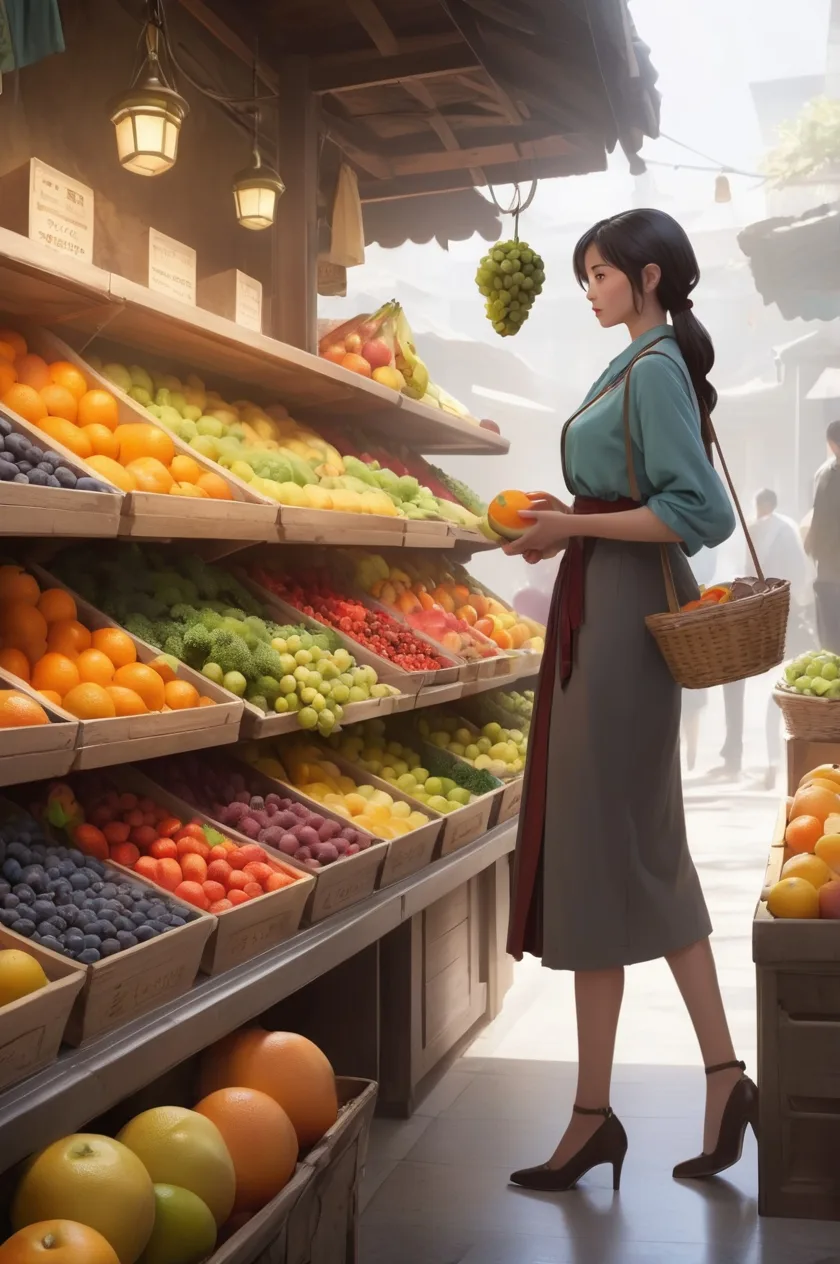
Welcome to Day 6 of your 30-Day English Conversation Challenge! Today you will practice one of the most universally useful everyday situations — shopping at a local fruit market. Whether you are buying groceries in an English-speaking country, visiting a market on holiday, or simply want to understand how prices, quantities, and transactions are discussed in natural English, this conversation covers everything you need.
In this free conversation, a buyer visits a fruit vendor and shops for bananas and oranges. You will practice how to ask the price of items using the essential phrase "How much are these…?", respond to prices that feel high using the polite and natural phrase "That's a little expensive," ask about available alternatives with "Do you have…?", request specific quantities clearly — including dozens and half kilos, ask for the total with "How much is it in total?", and complete a cash transaction naturally from handing over money to receiving change. Every exchange is short, practical, and models real market interactions used in English-speaking countries daily.
This conversation is ideal for travelers and tourists who shop at markets and street vendors in English-speaking countries, anyone learning how to discuss prices, quantities, and money in everyday English, and Day 6 participants building their shopping vocabulary after Day 4's supermarket and Day 3's restaurant practice. No partner needed — pick the Buyer or Vendor role and practice until every market phrase feels automatic!
Alright. One dozen bananas and half a kilo oranges.
Buyer
Yes, how much is it in total?
Vendor
It’s 2$.
Buyer
Here is 2$.
Vendor
Thank you! Here’s your change.
Buyer
Thank you very much!
Vendor
You’re welcome. Have a nice day!
Easy english speaking phrases you should know
1. How much are these…? — To ask the price of an item.
Example 1: How much are these apples?
Example 2: She asked the shopkeeper, “How much are these shoes?”
2. That’s a little expensive — To politely say something costs more than expected.
Example 1: I like the bag, but that’s a little expensive for me.
Example 2: He checked the price and said, “That’s a little expensive.”
3. Do you have…? — To check if something is available.
Example 1: Do you have fresh milk today?
Example 2: She asked, “Do you have this shirt in blue color?”
4. Give me… please — A polite way to order something.
Example 1: Give me one kilo of potatoes, please.
Example 2: Give me a bottle of water, please.
5. Anything else? — Used by shopkeepers to ask if you want more.
Example 1: After packing the items, the seller asked, “Anything else?”
Example 2: The cashier smiled and said, “Anything else, sir?”
6. How much is it in total? — To ask for the final bill.
Example 1: After shopping, she asked, “How much is it in total?”
Example 2: He put all the items on the counter and asked for the total price.
7. Here’s your change — Phrase used when returning balance money.
Example 1: The shopkeeper gave the money back and said, “Here’s your change.”
Example 2: After payment, the cashier returned the extra money as change.
Frequently Asked Questions – Day 6: Market English Conversation
Q1. How do you ask the price of something at a market in English?
Use the direct, polite question: "How much are these apples?" or "How much is one kilo of oranges?" For general pricing: "What is the price of this?" or "How much does this cost?" At a market or street stall, short and direct questions are always appropriate — vendors expect them and prefer clear, quick exchanges. Always smile and make eye contact — in market settings, friendly body language is as important as correct language.
Q2. How do you politely say something is too expensive in English?
Use softened, non-offensive phrases: "That's a little expensive for me" or "It's a bit more than I expected." You can follow with a counter-offer: "Could you do a better price?" or "Is there any discount?" Avoid saying "That's too expensive!" bluntly — it can sound rude. The word "little" or "bit" softens your reaction considerably and keeps the interaction friendly, which is especially important in market and vendor settings where the relationship matters for future purchases.
Q3. How do you ask for a specific quantity at a market in English?
Quantities at a market are expressed clearly: "Give me one dozen bananas, please" (12 bananas), "I'll take half a kilo of oranges" (500 grams), "Could I get two kilos of apples?" or "Just one bunch of grapes, please." Learning quantity words — dozen, kilo, half kilo, bunch, bag — gives you everything you need to shop confidently at any market or grocery store in any English-speaking country without confusion or misunderstanding.
Q4. How do you ask for the total amount at a market in English?
Ask simply: "How much is it in total?" or "What's the total?" or "How much do I owe you?" After the vendor tells you the total, you can confirm: "So that's $2 in total, right?" Then pay and check your change: "Here's $5" — the vendor will say "And here's your $3 change." If the change seems wrong, politely say: "I think I gave you $5, not $2." Knowing this full payment sequence lets you complete any market transaction in English from start to finish.
Q5. What is the difference between a market and a supermarket in English?
A "market" — also called a "street market," "farmers' market," or "local market" — is typically an outdoor or semi-outdoor place where individual vendors sell fresh produce, goods, and food directly. Prices are sometimes negotiable. A "supermarket" is a large indoor store with fixed prices, organized aisles, and checkout counters. In English conversations, you go "to the market" for fresh produce and bargaining, and "to the supermarket" for packaged goods and weekly groceries. Both settings use different vocabulary and interaction styles, which is why practicing both conversations separately is valuable.

 WhatsApp Group